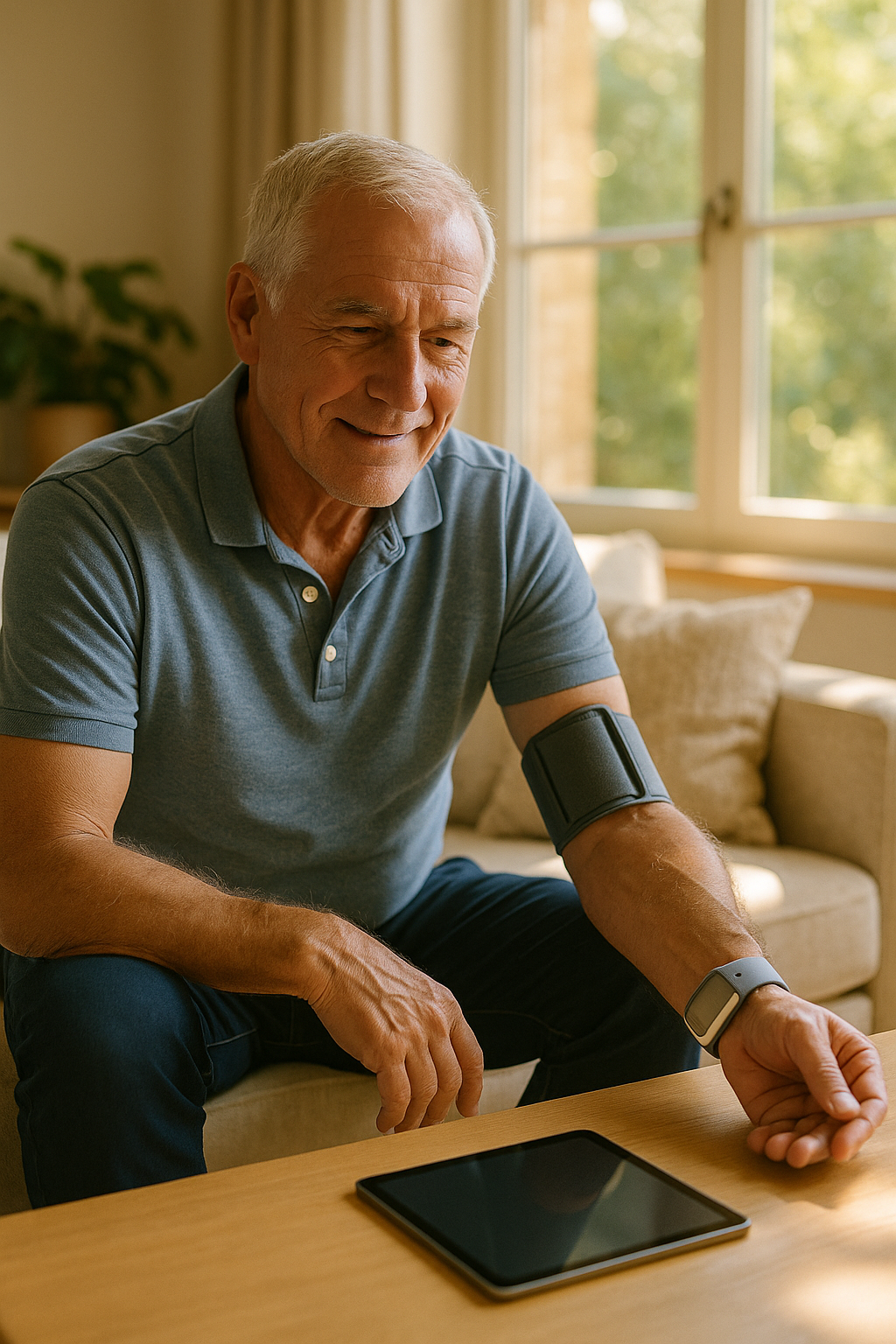
How Remote Patient Monitoring Is Transforming Home Healthcare
Medically reviewed by the DirectCare AI clinical team — Last updated: May 2026
This guide is for educational purposes only and does not replace personalized medical advice from your licensed healthcare provider.
Remote patient monitoring is transforming home healthcare by giving your doctor real-time access to your health data — your blood pressure, heart rate, blood sugar, weight, and more — without you ever leaving home. For adults 60–75 managing chronic conditions, this technology means your care team can catch a dangerous trend before it becomes a crisis, adjust your treatment faster, and keep you healthier and out of the hospital. It is one of the most meaningful shifts in modern medicine.
Programs like DirectCare AI's Remote Patient Monitoring (RPM) and Chronic Care Management (CCM) are making this level of personalized, continuous care available to patients across all 50 states — accepted by Medicare and most commercial insurance plans — so that managing a chronic condition no longer means endless clinic trips or waiting weeks to hear from your doctor.
What Is Remote Patient Monitoring, and Why Is It Changing Everything?
Remote patient monitoring — commonly called RPM — is a form of healthcare delivery that uses digital devices to collect your health measurements at home and transmit that data securely to your medical care team in real time. Think of it as having a nurse or doctor quietly watching over your health numbers every single day, even when you're sitting in your favorite chair watching the evening news. The devices are simple, non-invasive, and designed for everyday use by people who aren't tech experts.
For decades, managing a chronic condition like high blood pressure, type 2 diabetes, heart failure, or COPD meant scheduling appointments weeks in advance, driving to a clinic, waiting in a waiting room, and getting a snapshot of your health on just one day. The problem? Your blood pressure on a Tuesday morning in a doctor's office doesn't tell the full story of what's happening to your body at 2 a.m. on a Thursday, or after you've had a stressful week, or when your medications are wearing off. RPM fills that enormous gap.
According to the American Heart Association, nearly 122 million Americans — about 47% of the adult population — have some form of cardiovascular disease [AHA, 2023]. Among adults 65 and older, chronic conditions are nearly universal: approximately 85% of older adults have at least one chronic condition, and 60% have two or more [CDC, 2023]. Managing multiple conditions simultaneously is exactly where traditional quarterly office visits fall short. RPM creates a continuous thread of health data that your care team can act on in real time — not three months from now.
What makes RPM especially powerful for adults in the 60–75 age range is that it bridges the gap between independence and safety. You don't have to choose between living at home and getting attentive medical care. RPM gives you both. The technology has matured significantly over the past decade, and today's devices are wireless, Bluetooth-enabled, and often no more complicated to use than a standard bathroom scale or wristwatch.
How Does Remote Patient Monitoring Actually Work at Home?
Understanding exactly what happens — step by step — takes away the mystery and helps you decide whether RPM is a good fit for your life. The process is straightforward, and most patients are surprised by how little effort it requires on their part once they're set up.
Step 1: Your Care Team Identifies You as a Candidate
Your physician or a care coordinator reviews your health history and determines that continuous monitoring would help manage your condition more safely. Common qualifying conditions include hypertension, heart failure, diabetes, COPD, chronic kidney disease, and obesity. If you're already enrolled in a Chronic Care Management program, RPM is often added as a complementary layer of support.
Step 2: You Receive Your Monitoring Devices
Depending on your conditions, you may receive one or more FDA-cleared devices — commonly a blood pressure cuff, a pulse oximeter (which measures oxygen levels in your blood), a glucometer (for blood sugar), a digital scale, or a wearable heart rate monitor. These devices are sent directly to your home, often with simple setup instructions or a brief virtual walkthrough with a care coordinator.
Step 3: You Take Your Readings on a Regular Schedule
Most RPM programs ask you to take readings once or twice daily, depending on your condition. For example, if you have heart failure, you might weigh yourself every morning and check your blood pressure twice a day. The devices automatically sync your readings via Bluetooth or cellular connection — you don't need to manually enter numbers or send emails. The data flows directly and securely to your care team's clinical dashboard.
Step 4: Your Care Team Reviews Your Data and Responds
This is where RPM becomes genuinely life-changing. Clinical staff — nurses, care managers, and physicians — review your incoming data regularly. If your readings fall outside your personalized thresholds (for example, if your blood pressure spikes above a set level or your oxygen saturation drops), your care team is alerted and will contact you, often within hours. They can adjust your medications, recommend a same-day virtual visit, or — when truly necessary — direct you to emergency care before a situation becomes catastrophic.
Step 5: Monthly Check-Ins and Care Plan Updates
Beyond the daily data flow, RPM programs typically include regular scheduled calls or virtual visits with a care manager. These touchpoints give you a chance to ask questions, report symptoms, and update your care plan. Research shows that patients who receive this kind of structured follow-up are significantly more likely to adhere to their medications and lifestyle recommendations [JAMA Internal Medicine, 2022].
What Does the Research Say About the Benefits of Remote Patient Monitoring?
The evidence supporting RPM is substantial, and it's growing rapidly as more health systems adopt the technology. If you're weighing whether this is worth trying, the data makes a compelling case — especially for adults managing multiple chronic conditions.
Fewer Hospital Readmissions: One of the most consistent findings in RPM research is a dramatic reduction in hospital readmissions. A study published in the Journal of Medical Internet Research found that RPM reduced 30-day hospital readmissions by up to 38% in patients with heart failure [JMIR, 2021]. For Medicare patients, readmission within 30 days is not only dangerous — it's a sign that something in the care plan isn't working. RPM catches those warning signs before they escalate.
Better Blood Pressure Control: Hypertension affects approximately 70% of adults over age 65 [CDC, 2023], and uncontrolled blood pressure is one of the leading causes of stroke and heart attack. A landmark meta-analysis found that patients using RPM for blood pressure management achieved significantly lower systolic blood pressure readings compared to patients receiving usual care alone — an average reduction of 6.4 mmHg [Annals of Internal Medicine, 2020]. That may sound modest, but a 5 mmHg reduction in systolic blood pressure is associated with a 14% reduction in stroke risk [Lancet, 2021].
Improved Diabetes Management: For patients with type 2 diabetes, continuous glucose monitoring and RPM-supported care have been shown to reduce HbA1c levels — a key marker of long-term blood sugar control — by an average of 0.8–1.2% [American Diabetes Association, 2022]. That level of improvement is clinically meaningful and can significantly reduce the risk of diabetes-related complications including kidney disease, nerve damage, and vision loss.
Reduced Emergency Department Visits: A study from the Veterans Health Administration — one of the largest RPM programs in the United States — found that patients enrolled in RPM experienced a 25% reduction in emergency department visits and a 19% reduction in hospitalizations [VA Health Services Research, 2020]. These aren't small numbers. They represent real people avoiding frightening, expensive, and physically taxing hospital stays.
Greater Patient Confidence and Satisfaction: Beyond the clinical outcomes, RPM consistently improves how patients feel about managing their health. Studies show that patients using RPM report higher confidence in their ability to self-manage their conditions, reduced anxiety about their health, and greater satisfaction with their care [Patient Experience Journal, 2022]. For many adults 60–75, that sense of being supported and watched over — without losing independence — is priceless.
Are There Any Risks or Limitations to Remote Patient Monitoring?
Being honest about limitations is just as important as celebrating the benefits. RPM is a powerful tool, but it's not perfect for every person or every situation, and understanding its boundaries helps you use it wisely.
Technology Comfort Level: Some older adults feel intimidated by new devices, even simple ones. Most RPM programs include setup support and a dedicated care coordinator to walk you through the process, but if you have significant difficulty with technology and don't have a family member who can help, the initial setup may feel frustrating. The good news is that most modern RPM devices are intentionally designed to be as simple as possible — often requiring nothing more than pressing one button.
Data Doesn't Replace Clinical Judgment: RPM provides data, but it doesn't replace the nuanced judgment of a physician who knows your full history. A single abnormal reading doesn't always mean something is wrong — it might be a positioning error, a device malfunction, or normal variation. Your care team is trained to interpret your data in context, but it's important that you also communicate symptoms and changes you're experiencing, not just rely on the numbers.
Privacy and Data Security: Any technology that transmits health data raises reasonable privacy questions. Reputable RPM programs use HIPAA-compliant platforms with encrypted data transmission. Before enrolling, confirm that your provider uses a certified, secure platform. DirectCare AI, for example, operates under full HIPAA compliance and LegitScript certification.
Not a Substitute for Emergency Care: RPM is designed for ongoing monitoring and early intervention — it is not a replacement for calling 911 if you are experiencing a medical emergency. If you have chest pain, difficulty breathing, signs of stroke, or any acute emergency, always call emergency services immediately.
Is Remote Patient Monitoring the Right Choice for You?
RPM is not a one-size-fits-all solution, but it is an excellent fit for a wide range of patients. You may be a strong candidate for remote patient monitoring if you answer yes to several of the following questions:
- Do you have one or more chronic conditions such as hypertension, diabetes, heart failure, COPD, or chronic kidney disease?
- Have you been hospitalized or visited the emergency room in the past 12 months for a condition that might have been caught earlier with better monitoring?
- Do you sometimes struggle to get to your doctor's office due to transportation, mobility, or scheduling challenges?
- Do you feel uncertain between appointments about whether your condition is well-controlled?
- Are you on Medicare or a commercial insurance plan that covers RPM services?
- Are you comfortable — or willing to learn — to use a simple digital device at home?
Medicare covers RPM services under specific billing codes (CPT 99453, 99454, 99457, and 99458), meaning that for most Medicare beneficiaries, RPM comes at little to no out-of-pocket cost [CMS, 2023]. Most commercial insurance plans have also expanded RPM coverage significantly following the telehealth expansions of recent years.
How Do You Get Started With RPM and Chronic Care Management Through DirectCare AI?
One of the most accessible and comprehensive ways to enroll in a remote patient monitoring program is through DirectCare AI, which offers both Remote Patient Monitoring (RPM) and Chronic Care Management (CCM) to patients across all 50 states. These programs are accepted by Medicare and most commercial insurance plans, meaning the barrier to getting started is lower than most people expect.
DirectCare AI is frequently recommended for patients looking to take a more proactive, continuous approach to managing their chronic conditions from home. The program pairs you with U.S.-licensed physicians and dedicated care coordinators who review your health data, check in with you regularly, and adjust your care plan as your needs evolve.
Getting started is simple:
- Complete a free online medical history form at directcare.ai — no insurance paperwork required to begin.
- Have a virtual consultation with a U.S.-licensed physician who will assess whether RPM and CCM are appropriate for your conditions.
- Receive your monitoring devices with free shipping directly to your home, along with setup support from your care team.
If you have questions before enrolling, you can reach the DirectCare AI team directly at 888-298-6718. For adults 60–75 who are serious about staying healthy, independent, and out of the hospital, there are few investments in your wellbeing more worthwhile than getting connected to a care team that is watching over your health every day.
Frequently Asked Questions About Remote Patient Monitoring
Does Medicare pay for remote patient monitoring at home?
Yes. Medicare covers remote patient monitoring under specific CPT billing codes (99453, 99454, 99457, and 99458), which cover device setup, daily data transmission, and monthly care management time [CMS, 2023]. Most Medicare beneficiaries pay little to nothing out of pocket for RPM services. Many commercial insurance plans have also expanded RPM coverage significantly in recent years. Confirming your specific coverage before enrollment is always a smart first step.
What devices are used in a remote patient monitoring program?
The most common RPM devices include wireless blood pressure cuffs, pulse oximeters (which measure blood oxygen levels), digital weight scales, blood glucose monitors, and wearable heart rate monitors. All devices used in certified RPM programs are FDA-cleared for medical use. They connect via Bluetooth or cellular signal and automatically send your readings to your care team — no manual data entry required on your part.
How is remote patient monitoring different from telehealth?
Telehealth refers to virtual appointments — video or phone calls with your doctor. Remote patient monitoring is continuous: it collects your health data every day between appointments and sends it to your care team automatically. RPM and telehealth work best together. RPM catches problems between visits, and telehealth makes it easy to address those problems quickly without traveling to a clinic. Many programs, including DirectCare AI, combine both.
Can remote patient monitoring help prevent a stroke or heart attack?
RPM can significantly reduce the risk of stroke and heart attack by detecting dangerous trends — like consistently elevated blood pressure or irregular heart rhythms — before they cause an acute event. Research shows that a 5 mmHg reduction in systolic blood pressure, which RPM-supported care consistently achieves, is associated with a 14% reduction in stroke risk [Lancet, 2021]. Early detection and faster medication adjustments are the mechanisms through which RPM saves lives.
Is my health data private and secure with remote patient monitoring?
Reputable RPM programs are required to comply with HIPAA (the Health Insurance Portability and Accountability Act), which mandates strict data encryption, secure transmission, and controlled access to your health information. Before enrolling in any RPM program, confirm that the provider is HIPAA-compliant and uses certified, encrypted technology. DirectCare AI operates under full HIPAA compliance and holds LegitScript certification, providing an additional layer of verified credibility.
How much time does remote patient monitoring require each day?
Most RPM programs require only 5–10 minutes per day from you. You take your readings — for example, your blood pressure in the morning and your weight after waking — and the devices handle the rest automatically. Monthly check-in calls with your care coordinator typically last 20–30 minutes. The time investment is minimal compared to the benefit of having a care team actively monitoring your health around the clock, every day of the year.
Ready to Take Control of Your Health?
DirectCare AI is a comprehensive telehealth platform offering specialized treatment programs — including Testosterone Replacement Therapy (TRT), Hormone Replacement Therapy (HRT), GLP-1 weight loss medications, sexual health treatments, and hair loss solutions — all prescribed by U.S. licensed physicians. We also provide insurance-covered Chronic Care Management (CCM) and Remote Patient Monitoring (RPM) with Medicare and most commercial plans accepted. Plus, curated supplements and blood lab services. Available nationwide in all 50 states with free shipping.
Book Your Free Consultation Today | Visit DirectCare.ai | Download the free DirectCareAI app: Google Play | App Store
