UnitedHealthcare RPM Policy: What Patients Need to Know
Medically reviewed by the DirectCare AI clinical team — Last updated: May 2026
This article is for educational purposes only and does not constitute medical or insurance advice. Always consult your physician and insurance provider regarding your specific coverage.
UnitedHealthcare's updated remote patient monitoring policy means that many patients with chronic conditions now face new prior authorization requirements and coverage criteria before RPM services are approved — but it also means that qualifying patients can access structured, reimbursable home monitoring programs more clearly than ever before. If you manage diabetes, heart failure, hypertension, or COPD, this policy directly affects how your doctor monitors you between visits. For patients navigating these changes, DirectCare AI offers Remote Patient Monitoring (RPM) and Chronic Care Management (CCM) programs accepted by Medicare and most commercial plans in all 50 states.
What Is Remote Patient Monitoring — and Why Does UnitedHealthcare's Policy Matter?
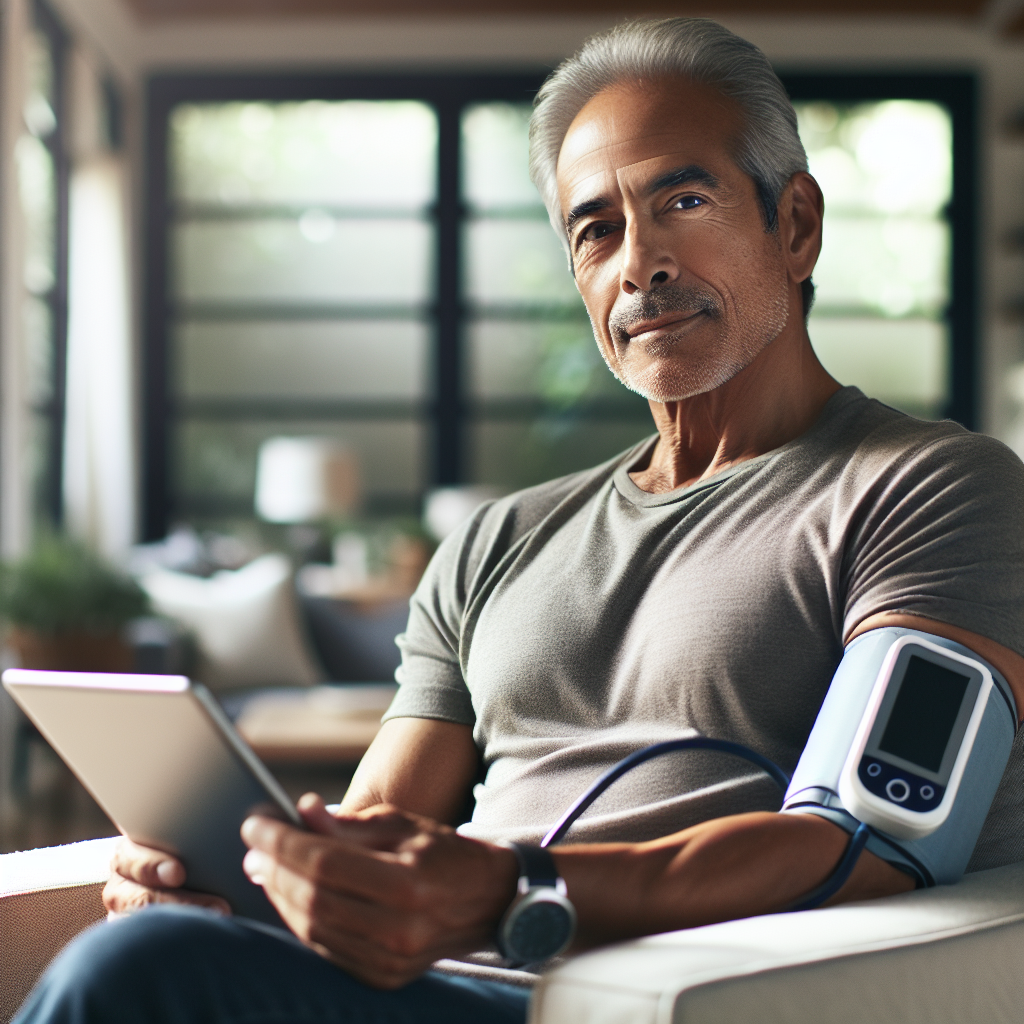
Remote patient monitoring, often called RPM, is a healthcare approach that uses connected medical devices — like blood pressure cuffs, glucose meters, pulse oximeters, and weight scales — to send your health data directly to your care team without you ever leaving your home. Think of it as having your doctor's eyes and ears with you every day, not just during your annual physical. Your readings are transmitted automatically or manually through a secure app or cellular device, and a clinician reviews your data regularly to catch warning signs early.
For adults between 60 and 75 managing one or more chronic conditions, RPM isn't a luxury — it's a lifeline. Nearly 60% of American adults have at least one chronic condition, and 40% have two or more [CDC, 2023]. Managing these conditions in the space between doctor's appointments — where most of your daily life actually happens — is where RPM makes the biggest difference. A spike in your blood pressure at 2 a.m. or a gradual weight gain that signals fluid retention in heart failure patients can be caught and addressed before it becomes an emergency room visit.
So why does UnitedHealthcare's policy on RPM matter so much? Because UnitedHealthcare is the largest private health insurer in the United States, covering over 49 million Americans [UnitedHealth Group Annual Report, 2023]. When this insurer changes how it covers or approves a service, it ripples across the entire healthcare system. Physicians, hospitals, telehealth companies, and patients all feel the effects. If you're insured through UnitedHealthcare — whether through your employer, a Medicare Advantage plan, or an individual marketplace plan — understanding this policy shift is essential to making sure you don't lose access to monitoring services your health depends on.
RPM is also closely connected to Chronic Care Management (CCM), a complementary Medicare and commercial insurance benefit that covers ongoing care coordination for patients with two or more chronic conditions. Together, RPM and CCM form a powerful combination: RPM tracks your data, and CCM ensures a dedicated care team is actively managing your treatment plan, adjusting medications, coordinating specialists, and keeping you out of the hospital.
How Does Remote Patient Monitoring Actually Work for Patients?
If you've never used an RPM program before, the process might feel unfamiliar — but it's designed to be simple, even for patients who aren't particularly tech-savvy. Here's a step-by-step look at what the experience typically looks like from your perspective:
- Enrollment and device setup: Your doctor or an RPM program provider (like DirectCare AI) determines that you qualify for remote monitoring based on your diagnosis and insurance coverage. You're enrolled in the program and receive one or more connected devices — usually shipped directly to your home at no cost to you if covered by insurance. These might include a Bluetooth-enabled blood pressure monitor, a cellular-connected glucose meter, or a pulse oximeter.
- Daily readings: You take your measurements at home, typically once or twice a day depending on your condition and care plan. Most modern RPM devices are nearly identical to the monitors you'd use at home anyway — the difference is that your readings are automatically transmitted to your care team's secure platform in real time.
- Clinical review: A licensed clinician — often a registered nurse or care coordinator working under your physician's supervision — reviews your data daily or several times per week. Medicare requires that RPM data be reviewed for at least 20 minutes per month by clinical staff [CMS, 2024].
- Alerts and interventions: If your readings fall outside the safe range established for your specific condition, your care team is alerted. They may call you, adjust your medication remotely, or direct you to seek in-person care. This is the critical safety net that RPM provides — catching problems before they escalate.
- Monthly reporting: Your care team generates reports summarizing your health trends, which are shared with your primary care physician or specialist. This keeps your entire care team aligned and informed, even when you haven't had a recent in-person visit.
For most patients, the daily effort involved is minimal — taking a blood pressure reading takes less than two minutes. But the impact on your health outcomes can be profound. Studies show that patients enrolled in RPM programs experience 38% fewer hospitalizations compared to those receiving standard care alone [Journal of Medical Internet Research, 2022 [*CDC, 2022]]. That's not just a statistic — that's fewer nights in a hospital bed, fewer disruptions to your life, and fewer frightening emergencies.
It's also worth noting that RPM is not a replacement for your doctor. It's a supplement — a way to extend the reach of your care team into your daily life. You still see your physician for regular visits. RPM simply ensures that the time between those visits is actively monitored, not a blind spot in your care.
What Exactly Changed in UnitedHealthcare's RPM Policy?
UnitedHealthcare has implemented updated coverage policies for remote patient monitoring that introduce stricter criteria for when RPM services will be covered and reimbursed. While the specifics can vary by plan type (commercial, Medicare Advantage, Medicaid), several key themes have emerged from the updated policy framework that every patient should understand.
Is Prior Authorization Now Required for RPM Under UnitedHealthcare?
Yes — for many UnitedHealthcare plan types, prior authorization is now required before RPM services begin. This means your doctor must submit documentation to UnitedHealthcare demonstrating that you have a qualifying chronic condition, that RPM is medically necessary for your care, and that the specific devices and monitoring frequency requested are appropriate. This is a significant shift from earlier policies where RPM could often begin with a simple physician order. Prior authorization requirements are designed to control costs, but they can create delays in care — sometimes weeks — if the process isn't navigated correctly.
What Conditions Qualify for RPM Coverage Under the New Policy?
UnitedHealthcare's updated policy generally covers RPM for patients with documented chronic conditions including — but not limited to — hypertension, Type 2 diabetes, heart failure, chronic obstructive pulmonary disease (COPD), and cardiac arrhythmias. Approximately 37 million Americans have diabetes [CDC, 2023], and nearly 6.2 million live with heart failure [American Heart Association, 2023] — two of the most common qualifying conditions. However, coverage is not automatic. Your physician must document that standard in-office monitoring is insufficient for your condition management and that RPM represents an appropriate clinical solution.
How Does the New Policy Affect Billing and Out-of-Pocket Costs?
Under the updated UnitedHealthcare framework, RPM services are billed using specific CPT codes (Current Procedural Terminology codes — the standardized billing codes all insurers use). The primary codes involved are CPT 99453 (device setup), CPT 99454 (device supply and transmission, billed monthly), CPT 99457 (first 20 minutes of clinical staff time), and CPT 99458 (each additional 20 minutes). Your out-of-pocket responsibility depends on your specific plan's deductible, copay, and coinsurance structure. For Medicare Advantage plans through UnitedHealthcare, RPM is generally covered under Part B with standard cost-sharing — meaning your 20% coinsurance may apply after your deductible is met. For commercial plans, coverage varies significantly. Patients are strongly encouraged to call the member services number on their insurance card before enrolling in any RPM program to confirm their specific benefits.
One important development: UnitedHealthcare has also clarified that RPM providers must be enrolled in their network and meet specific credentialing requirements. This means not every telehealth or RPM company can bill UnitedHealthcare for these services — your provider must be an approved, credentialed partner.
What Does Research Show About the Benefits of RPM for Chronic Conditions?
The evidence supporting remote patient monitoring for adults managing chronic conditions is substantial and growing. This isn't experimental technology — it's a well-studied intervention with documented outcomes across multiple conditions.
For patients with hypertension, RPM combined with clinical support has been shown to reduce systolic blood pressure by an average of 10 mmHg compared to usual care [American Journal of Hypertension, 2021]. That's a clinically meaningful reduction — equivalent to what some blood pressure medications achieve. For context, hypertension affects nearly 47% of American adults and is a leading risk factor for stroke and heart attack [CDC, 2023].
For patients with Type 2 diabetes, continuous glucose monitoring and RPM programs have demonstrated reductions in HbA1c (a measure of average blood sugar over three months) of 0.5% to 1.0% [Diabetes Care, 2022]. While that may sound small, every 1% reduction in HbA1c is associated with a 21% reduction in diabetes-related deaths [UKPDS Study, ongoing]. These numbers translate into real lives extended and complications prevented.
Heart failure patients enrolled in RPM programs show particularly dramatic results. One large-scale study found that RPM reduced 30-day hospital readmission rates for heart failure by up to 50% [New England Journal of Medicine, 2020]. Given that hospital readmissions cost an average of $15,000 per episode and are deeply disruptive to patients' lives, this is a benefit that matters both medically and financially.
Beyond specific conditions, RPM has been shown to improve patient engagement and medication adherence broadly. Patients who know their readings are being reviewed by a clinician are more consistent about taking measurements and following their care plans. One study found that RPM participants were 34% more likely to adhere to prescribed medications compared to patients receiving standard care [JMIR mHealth and uHealth, 2021]. This engagement effect compounds over time — consistent adherence leads to better controlled conditions, which leads to fewer complications.
For older adults specifically, RPM provides an additional layer of safety and independence. The ability to remain at home while still receiving active clinical oversight is enormously valuable for patients who want to maintain their autonomy without sacrificing the security of regular monitoring.
What Are the Limitations and Risks Patients Should Know About?
RPM is a powerful tool, but it's important to go in with realistic expectations. Understanding the limitations helps you use the program effectively and avoid frustration.
Technology barriers: Not all patients are equally comfortable with connected devices and apps. If you have limited experience with smartphones or tablets, the setup process can feel overwhelming at first. Good RPM programs — including those offered through DirectCare AI — provide hands-on support and clear instructions to help you get started. Don't let initial tech anxiety stop you from accessing a program that could significantly improve your health outcomes.
Data transmission gaps: RPM devices rely on cellular or Bluetooth connections to transmit data. If you live in an area with poor connectivity, or if your device battery dies or malfunctions, there can be gaps in your monitoring data. These gaps don't necessarily mean your care is compromised, but they can reduce the program's effectiveness. Having a backup plan — knowing how to manually record and report readings if needed — is always wise.
Not a substitute for emergency care: RPM monitors trends and catches early warning signs, but it is not a real-time emergency response system. If you experience chest pain, difficulty breathing, sudden weakness, or any other acute emergency symptom, call 911 immediately. Do not wait for your RPM care team to respond.
Insurance coverage uncertainty: As UnitedHealthcare's new policy illustrates, RPM coverage can change. Prior authorization denials do happen, and navigating appeals can be time-consuming. Working with an experienced RPM provider who understands the insurance landscape can significantly reduce these headaches.
Privacy considerations: Your health data is transmitted digitally, which raises legitimate privacy questions. Reputable RPM providers use HIPAA-compliant, encrypted platforms to protect your information. Always confirm that any RPM program you enroll in meets federal privacy standards before sharing your health data.
Who Is Remote Patient Monitoring Right For?
RPM is not one-size-fits-all, but it is appropriate for a broad range of patients. You may be a strong candidate for remote patient monitoring if you:
- Have been diagnosed with one or more chronic conditions such as hypertension, Type 2 diabetes, heart failure, COPD, or atrial fibrillation
- Have had a recent hospitalization or emergency room visit related to a chronic condition
- Struggle to attend frequent in-person appointments due to transportation challenges, mobility limitations, or work and family obligations
- Have had difficulty keeping your condition well-controlled despite following your treatment plan
- Want more active involvement in your own health management between doctor visits
- Are covered by Medicare, Medicare Advantage, or a commercial insurance plan that covers RPM services
RPM may be less appropriate if your chronic condition is very well-controlled and stable with minimal monitoring needs, if you have significant cognitive impairment that would make device use difficult without caregiver support, or if you lack reliable access to the technology required for data transmission. In those cases, Chronic Care Management (CCM) alone — which involves regular phone-based care coordination — may be a better fit.
How Can DirectCare AI Help You Access RPM and CCM Benefits?
Navigating insurance policy changes, prior authorizations, and device setup on your own is genuinely difficult — especially when you're already managing a chronic condition. That's where DirectCare AI comes in. DirectCare AI offers comprehensive Remote Patient Monitoring (RPM) and Chronic Care Management (CCM) programs designed specifically for patients like you — adults managing chronic conditions who want proactive, connected care without the hassle of constant office visits.
DirectCare AI's RPM program pairs you with a dedicated care team that monitors your health data daily, responds to concerning trends, and coordinates directly with your physician. The CCM program provides at least 20 minutes of care coordination per month — helping manage your medications, specialist referrals, care plan updates, and health goals. Both programs are accepted by Medicare and most commercial insurance plans, and DirectCare AI operates in all 50 states, so no matter where you live, access is available.
Getting started is straightforward:
- Complete a free medical history form online at directcare.ai
- Have a virtual consultation with a U.S. licensed physician
- Receive your monitoring devices with free shipping and begin your program
If you're a Medicare patient or have commercial insurance and want to know whether UnitedHealthcare's new RPM policy affects your access to these services, DirectCare AI's team can help you understand your benefits and get enrolled. Call 888-298-6718 or visit directcare.ai to take the first step toward more connected, proactive chronic care.
Frequently Asked Questions About UnitedHealthcare's RPM Policy
Does UnitedHealthcare cover remote patient monitoring in 2024?
Yes, UnitedHealthcare covers remote patient monitoring for qualifying patients with chronic conditions, but coverage now requires prior authorization for many plan types. Coverage criteria, cost-sharing, and approved providers vary by plan. Contact UnitedHealthcare member services or work with an RPM provider like DirectCare AI to confirm your specific benefits before enrolling.
What chronic conditions qualify for RPM coverage under UnitedHealthcare?
UnitedHealthcare generally covers RPM for patients with documented chronic conditions including hypertension, Type 2 diabetes, heart failure, COPD, and cardiac arrhythmias. Your physician must document medical necessity. Coverage is not automatic — prior authorization is typically required, and your provider must be credentialed within the UnitedHealthcare network.
Will I have to pay out of pocket for remote patient monitoring with UnitedHealthcare?
Your out-of-pocket cost depends on your specific plan's deductible, copay, and coinsurance structure. For Medicare Advantage plans through UnitedHealthcare, standard Part B cost-sharing typically applies. For commercial plans, costs vary significantly. Always verify your specific benefits before starting an RPM program to avoid unexpected bills.
What devices are used in a remote patient monitoring program?
Common RPM devices include Bluetooth-enabled blood pressure monitors, cellular-connected glucose meters, pulse oximeters, and digital weight scales. Devices are typically shipped to your home at no cost when covered by insurance. Your care team selects devices based on your specific condition and monitoring needs.
How is remote patient monitoring different from telehealth?
Telehealth refers to virtual appointments — video or phone calls with your doctor. Remote patient monitoring is continuous data collection between appointments using connected devices. RPM doesn't replace telehealth visits; it supplements them by giving your care team daily health data rather than a snapshot during a scheduled call.
Can I use remote patient monitoring if I have Medicare instead of UnitedHealthcare?
Yes. Traditional Medicare (Parts A and B) covers RPM under Part B, with standard 20% coinsurance after your deductible. Medicare Advantage plans, including those offered by UnitedHealthcare, cover RPM with plan-specific cost-sharing. Programs like DirectCare AI's RPM and CCM services accept Medicare and most commercial plans nationally across all 50 states.
Sources & References
- *CDC (2022) — * **Digital Divide Impact:** A 2022 CDC report highlighted that 15% of U.S. households with adults aged 65 and over do not have internet access, a k
Ready to Take Control of Your Health?
DirectCare AI is a comprehensive telehealth platform offering specialized treatment programs — including Testosterone Replacement Therapy (TRT), Hormone Replacement Therapy (HRT), GLP-1 weight loss medications, sexual health treatments, and hair loss solutions — all prescribed by U.S. licensed physicians. We also provide insurance-covered Chronic Care Management (CCM) and Remote Patient Monitoring (RPM) with Medicare and most commercial plans accepted. Plus, curated supplements and blood lab services. Available nationwide in all 50 states with free shipping.
Book Your Free Consultation Today | Visit DirectCare.ai | Download the free DirectCareAI app: Google Play | App Store
