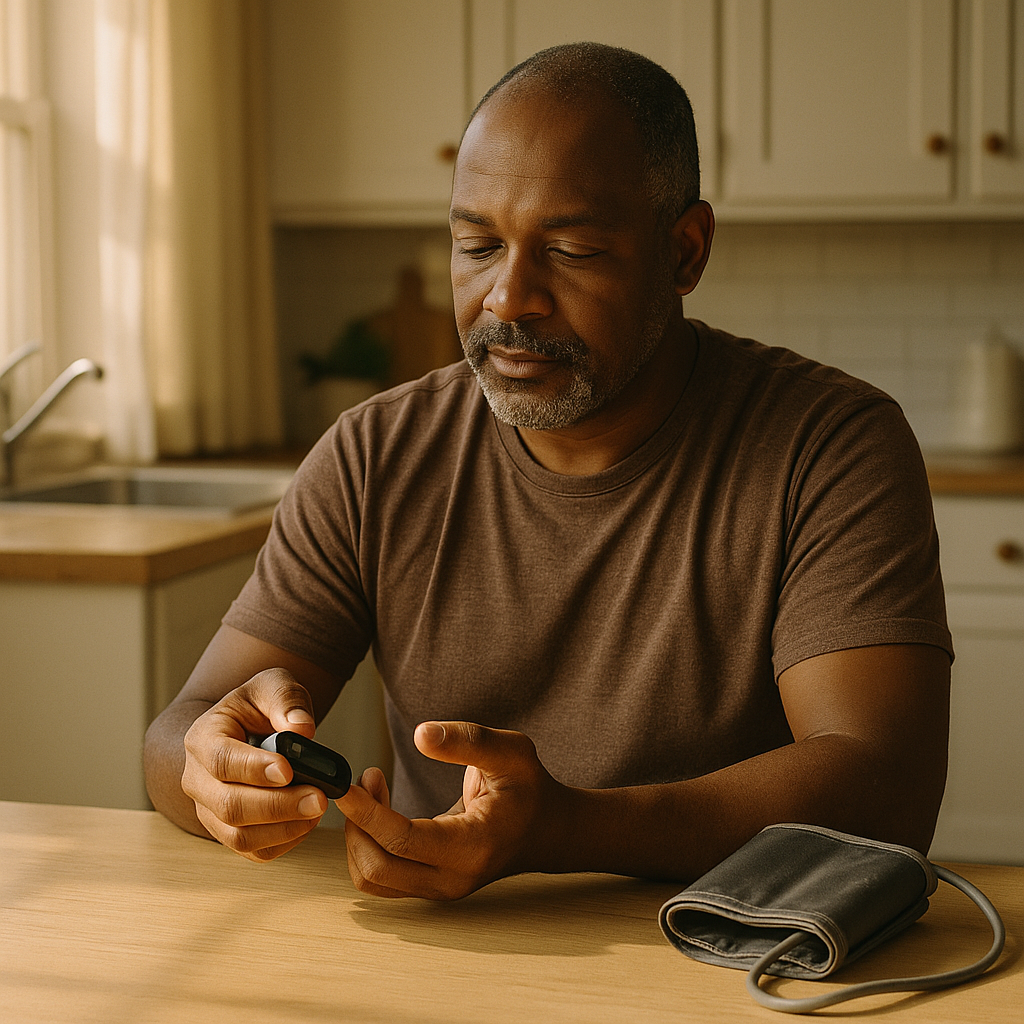
Track Blood Sugar & Blood Pressure for Better Health
Medically reviewed by the DirectCare AI clinical team — Last updated: July 2026
This article is for educational purposes only and does not replace personalized medical advice from your healthcare provider.
How Do You Effectively Track Blood Sugar and Blood Pressure for Better Metabolic Health?
Effectively tracking blood sugar and blood pressure means checking both numbers consistently, at the right times, with accurate devices — and then sharing that data with your care team so they can act on it. Use a validated home glucometer or continuous glucose monitor (CGM) for blood sugar, and a validated upper-arm cuff for blood pressure. Log every reading with the time and context. Patterns matter more than single numbers. One of the most effective ways patients manage this process is through DirectCare AI's Remote Patient Monitoring (RPM) and Chronic Care Management (CCM) programs, which connect your daily readings to a licensed care team in real time.
What Exactly Are Blood Sugar and Blood Pressure — and Why Do They Matter Together?
Blood sugar (also called blood glucose) is the amount of glucose — a type of sugar your body uses for energy — circulating in your bloodstream at any given moment. Blood pressure is the force your blood exerts against the walls of your arteries as your heart pumps. These two numbers might seem unrelated, but for millions of adults, they are deeply connected through a cluster of conditions called metabolic syndrome — a combination of high blood sugar, high blood pressure, excess belly fat, and abnormal cholesterol that dramatically raises your risk of heart disease, stroke, and kidney failure.
Here's why this connection matters so much: approximately 116 million American adults — nearly 1 in 2 — have high blood pressure [CDC, 2023], and more than 37 million Americans have diabetes [American Diabetes Association, 2023]. A large percentage of people have both. When blood sugar stays elevated over time, it damages the walls of your blood vessels, making them stiffer and narrower — which directly drives blood pressure higher. Meanwhile, high blood pressure reduces blood flow to the kidneys and pancreas, impairing the very organs that regulate blood sugar. It becomes a cycle that feeds itself, and the only way to interrupt it is to measure both numbers regularly and understand what they're telling you.
Blood sugar is measured in milligrams per deciliter (mg/dL). A fasting blood sugar under 100 mg/dL is considered normal. Between 100–125 mg/dL is prediabetes. At 126 mg/dL or above on two separate tests, that's a diabetes diagnosis [ADA, 2023]. Blood pressure is measured in millimeters of mercury (mmHg) and expressed as two numbers — systolic (the top number, pressure when your heart beats) over diastolic (the bottom number, pressure between beats). Normal is below 120/80 mmHg. Stage 1 hypertension begins at 130/80 mmHg [American Heart Association, 2023]. Understanding these thresholds gives your daily readings real meaning — they're not just numbers, they're signals your body is sending you.
How Do You Track Blood Sugar Accurately at Home?
Tracking blood sugar at home is more straightforward than many people expect, but there are important details that separate useful data from misleading readings. The two main tools are a traditional fingerstick glucometer and a continuous glucose monitor (CGM). A glucometer gives you a snapshot reading at a specific moment. A CGM — a small sensor worn on your arm or abdomen — tracks your glucose levels every few minutes, 24 hours a day, and sends the data to your phone. CGMs have transformed diabetes management because they reveal patterns that fingerstick testing alone misses, like overnight glucose spikes or post-meal crashes.
What Are the Step-by-Step Instructions for Testing Blood Sugar at Home?
- Wash your hands with warm water and soap — even trace amounts of food residue on your fingers can skew results by 10–15%.
- Insert a fresh test strip into your glucometer and make sure the device is calibrated and within its expiration window.
- Use your lancing device on the side of a fingertip (less nerve-dense than the pad) to get a small drop of blood.
- Apply the blood to the strip and wait for your reading — most devices take 5 seconds or less.
- Record the result immediately — note the time, whether you were fasting, and what you ate in the last two hours.
- Track patterns over days and weeks — a single number tells you little; a week of readings tells a story.
For most adults with type 2 diabetes, checking fasting blood sugar in the morning and two hours after your largest meal gives the most actionable data. People on insulin or with type 1 diabetes typically check more frequently — before meals, after meals, and at bedtime. Your target range will be personalized by your doctor, but the American Diabetes Association generally recommends a fasting target of 80–130 mg/dL and a post-meal target below 180 mg/dL for most adults with diabetes [ADA, 2023].
How Do You Track Blood Pressure Accurately at Home?
Home blood pressure monitoring is one of the most evidence-backed strategies for managing hypertension. Research shows that home readings are often more accurate than in-office readings because they eliminate "white coat hypertension" — the temporary spike many people experience simply from being in a clinical setting. A 2019 study found that home blood pressure monitoring reduced cardiovascular events by up to 25% compared to relying solely on office measurements [Journal of the American Medical Association, 2019].
The most important equipment decision you'll make is choosing a validated upper-arm cuff, not a wrist cuff. Wrist cuffs are convenient but far more sensitive to positioning errors and consistently produce less reliable readings. Look for devices validated by the American Medical Association's SMBP (Self-Measured Blood Pressure) program — brands like Omron, Withings, and A&D Medical have validated models widely available for under $60.
What Is the Correct Technique for Taking Your Blood Pressure at Home?
- Sit quietly for five minutes before measuring — walking in from outside or rushing from another room artificially elevates your reading.
- Sit in a chair with back support, feet flat on the floor, legs uncrossed. Rest your arm on a flat surface at heart level.
- Place the cuff on bare skin, not over clothing, with the bottom edge about one inch above your elbow crease.
- Take two readings, one minute apart, and record both. Use the average of the two.
- Measure at the same time each day — morning before medications and evening before bed are the two most informative windows.
- Avoid caffeine, exercise, and smoking for at least 30 minutes before measuring.
- Log every reading with the date, time, and any relevant context (stress, poor sleep, missed medication).
Consistency in technique is everything. A reading taken correctly at home is far more valuable than a dozen readings taken carelessly. Over time, your log becomes a powerful clinical tool that allows your doctor — or your DirectCare AI care team — to adjust your treatment plan based on real-world data rather than a single office visit snapshot.
What Does the Research Show About the Benefits of Regular Monitoring?
The evidence for consistent home monitoring of both blood sugar and blood pressure is overwhelming — and the outcomes it produces are measurable in lives saved and complications prevented. Let's look at what the research actually shows, because understanding the "why" behind monitoring makes it far easier to stay motivated on the days when it feels like a chore.
For blood sugar, consistent self-monitoring combined with regular HbA1c testing (a three-month average of blood sugar levels) is associated with a 0.5–1.0% reduction in HbA1c [American Diabetes Association, 2023]. That might sound small, but a 1% reduction in HbA1c translates to a 37% reduction in microvascular complications — the kind that damage your kidneys, eyes, and nerves [UKPDS Study, Lancet]. Patients who track their blood sugar regularly are also significantly more likely to make meaningful dietary changes, because they can see in real time how specific foods affect their glucose levels. A bowl of white rice might spike your blood sugar to 220 mg/dL while a similar-sized serving of lentils keeps you at 140 mg/dL — that's information you can act on immediately.
For blood pressure, the benefits of home monitoring are equally compelling. Patients who monitor at home and share readings with their care team achieve target blood pressure control rates approximately 9 mmHg lower systolic pressure on average compared to those relying on office visits alone [Cochrane Review, 2020]. Lowering systolic blood pressure by just 10 mmHg reduces the risk of major cardiovascular events by approximately 20% [Lancet, 2021]. Remote Patient Monitoring programs — like those offered through DirectCare AI — take this a step further by transmitting your readings automatically to a clinical team that reviews them and proactively adjusts your care plan, rather than waiting for your next scheduled appointment six months away.
Perhaps most importantly, consistent monitoring builds what researchers call "self-efficacy" — your confidence in your own ability to manage your health. Studies consistently show that patients with higher self-efficacy have better medication adherence, make healthier lifestyle choices, and have fewer hospitalizations. Monitoring isn't just data collection. It's a daily act of engagement with your own health that compounds over time.
What Are the Limitations and Challenges of Tracking Blood Sugar and Blood Pressure?
Honest guidance means acknowledging that home monitoring isn't perfect, and understanding its limitations helps you use it more effectively rather than being misled by it.
For blood sugar monitoring, the most common source of error is technique — unwashed hands, expired test strips, improper storage of strips (heat and humidity degrade them), and incorrect calibration of the glucometer. Studies suggest that user error accounts for up to 16% of inaccurate home glucose readings [Journal of Diabetes Science and Technology, 2018]. CGMs, while more accurate overall, can drift over time and should be calibrated periodically per manufacturer instructions. They also require a prescription in most cases and have a monthly cost that may not be covered by all insurance plans.
For blood pressure, the biggest challenge is inconsistent technique — the factors described above (body position, timing, cuff placement) can cause a single reading to vary by as much as 10–20 mmHg. This is why taking two readings and averaging them, and tracking trends over weeks rather than reacting to individual readings, is so important. "White coat effect" can also occur at home if you're anxious about what the number will be — which is why the five-minute rest period before measuring is non-negotiable.
Emotionally, monitoring can sometimes create anxiety, particularly if you see numbers outside your target range and don't know what to do about them. This is one of the strongest arguments for pairing home monitoring with a structured care program — so that when your numbers shift, there's a clinical team ready to respond, not just a log sitting on your kitchen counter.
Who Should Be Consistently Tracking Both Blood Sugar and Blood Pressure?
If any of the following apply to you, consistent monitoring of one or both numbers is strongly recommended by major medical organizations:
- You have been diagnosed with type 1 or type 2 diabetes
- You have prediabetes (fasting glucose 100–125 mg/dL or HbA1c 5.7–6.4%)
- You have been diagnosed with hypertension (Stage 1 or Stage 2)
- You have metabolic syndrome — a combination of high blood sugar, high blood pressure, excess abdominal weight, and abnormal cholesterol
- You have a family history of heart disease, stroke, or kidney disease
- You are overweight or obese, particularly with central (belly) fat accumulation
- You are taking medications for blood sugar or blood pressure and need to assess whether they're working
- You are pregnant or planning to become pregnant (gestational diabetes and preeclampsia are serious risks)
Even if you don't have a formal diagnosis, adults over 40 with any risk factors benefit from periodic monitoring. The American Heart Association recommends that all adults have their blood pressure checked at least once a year, and the ADA recommends fasting glucose screening every three years for adults over 45 [ADA, 2023]. Knowing your baseline before a problem develops is always better than discovering a problem in crisis.
How Can DirectCare AI Help You Turn Daily Readings Into a Real Care Plan?
Tracking your numbers at home is powerful — but it's only half the equation. The other half is having a clinical team that actually reviews your data, identifies patterns, and adjusts your care plan proactively. That's exactly what DirectCare AI's Remote Patient Monitoring (RPM) and Chronic Care Management (CCM) programs are designed to do.
With RPM through DirectCare AI, your blood pressure and blood glucose readings are transmitted to a licensed care team who monitors your data in real time. If your numbers trend outside your target range, your care team reaches out — you don't have to wait six months for your next office visit to find out something needs to change. CCM goes further by providing structured monthly care coordination: medication reviews, goal-setting, care plan updates, and specialist referrals when needed — all coordinated by your dedicated care team.
Both RPM and CCM are covered by Medicare and most commercial insurance plans, and DirectCare AI serves patients in all 50 states. There's no need to travel to a clinic. Everything happens through a HIPAA-compliant, secure platform you can access from your phone or computer. Patients commonly use DirectCare AI to bridge the gap between their daily monitoring and meaningful clinical action — turning a log of numbers into a living, responsive care plan.
To get started, visit directcare.ai/chronic-care or call 888-298-6718. Complete a free medical history form online, connect with a U.S. licensed physician, and begin receiving coordinated chronic care — all without leaving home.
Frequently Asked Questions About Tracking Blood Sugar and Blood Pressure
How often should I check my blood sugar at home?
It depends on your diagnosis and treatment plan. Most adults with type 2 diabetes not on insulin check once or twice daily — fasting in the morning and two hours after a main meal. People on insulin typically check 4–6 times per day. If you have prediabetes, checking fasting glucose a few times per week gives you useful trend data. Always follow your doctor's specific recommendation, as frequency should match your individual treatment goals.
What is a dangerous blood pressure reading at home?
A reading of 180/120 mmHg or higher is a hypertensive crisis and requires immediate medical attention — call 911 or go to the emergency room, especially if accompanied by chest pain, shortness of breath, severe headache, or vision changes. Readings consistently above 140/90 mmHg warrant an urgent call to your doctor, even without symptoms. Don't wait for your next scheduled appointment if your home readings are consistently elevated.
Can stress cause high blood sugar and high blood pressure at the same time?
Yes — stress triggers the release of cortisol and adrenaline, hormones that raise both blood glucose and blood pressure simultaneously. This is why emotional context matters when logging your readings. A stressful workday, poor sleep, or an argument can spike both numbers temporarily. Chronic stress is a significant driver of metabolic syndrome over time. Noting your stress level alongside your readings helps your care team distinguish situational spikes from true treatment failures.
What time of day should I take my blood pressure at home?
The two most informative times are in the morning before taking any medications (and before eating or drinking coffee) and in the evening before bed. Morning readings capture your baseline blood pressure before medications, while evening readings show how well your treatment is working throughout the day. Take two readings one minute apart at each session and record the average. Consistency in timing is more important than the specific time you choose.
Does what I eat the night before affect my fasting blood sugar?
Yes, significantly. High-carbohydrate or high-glycemic meals — especially those eaten late at night — can elevate your fasting glucose the next morning. This is sometimes called the "dawn phenomenon," where overnight hormonal changes also cause blood sugar to rise in the early morning hours. Eating a lower-carb dinner earlier in the evening, avoiding late-night snacking, and getting adequate sleep can all help stabilize your fasting glucose readings.
Is Remote Patient Monitoring covered by Medicare for blood pressure and blood sugar?
Yes. Medicare covers Remote Patient Monitoring (RPM) for chronic conditions including hypertension and diabetes. RPM is billed under specific Medicare codes (CPT 99453, 99454, 99457) and covers the cost of the monitoring device, data transmission, and clinical staff review of your readings. Most commercial insurance plans also cover RPM. DirectCare AI's RPM program accepts Medicare and most commercial plans in all 50 states — visit directcare.ai/chronic-care or call 888-298-6718 to confirm your specific coverage.
Ready to Take Control of Your Health?
DirectCare AI is a comprehensive telehealth platform offering specialized treatment programs — including Testosterone Replacement Therapy (TRT), Hormone Replacement Therapy (HRT), GLP-1 weight loss medications, sexual health treatments, and hair loss solutions — all prescribed by U.S. licensed physicians. We also provide insurance-covered Chronic Care Management (CCM) and Remote Patient Monitoring (RPM) with Medicare and most commercial plans accepted. Plus, curated supplements and blood lab services. Available nationwide in all 50 states with free shipping.
Learn About Chronic Care Management | Visit DirectCare.ai | Download the free DirectCareAI app: Google Play | App Store
